
'Some of the launches may get deferred due to the semiconductor shortage, which is unlikely to get resolved before the second half of 2022.'

Passenger Vehicle makers are likely to see their cumulative earnings at an operating level erode by Rs 1,800-2,000 crore in the year ending March 2022 on account of the shortage of semiconductors, rating agency Icra said at a webinar on Wednesday. The industry, it pointed out, is estimated to lose production of 500,000 units at the end of FY22 due to the chronovc shortage the chip, which is critical in safety, entertainment and the various other smart features of a car. "In absence of the chip crisis, the industry volumes are likely to have exceeded the all-time peak annual volumes." Icra has pared its growth estimates for the PV market from the earlier 10-14 per cent to 8-11 per cent now in FY22.

India's electric mobility goal, which has so far been riding on two wheels, is all set to graduate to four wheels. At least, the journey has begun. Hyundai Motor India said it would invest Rs 4,000 crore till 2028 to launch half-a-dozen electric vehicles (EVs) in India. It would eventually straddle premium and mass segments. The first of these - the electrified version of an internal combustion engine (ICE)-powered model - will go on sale as early as next year.
'We are not organising any large celebrations on New Year's Eve to avoid last-minute changes in guidelines.'

'Bharat has been leading, but it cannot carry India as the bulk of the sales come from India in terms of volume and profitability.'
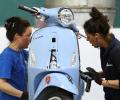
For every one experienced candidate being recruited by e-two wheeler companies, 10 have no prior experience; recruitments are for skilled, low-end jobs, not for managerial or supervisory roles.

Tata Motors, India's third largest passenger vehicle maker, took pole position in the competitive sport utility vehicle (SUV) market in October, reveals the data from industry sources. Riding high on the Punch - the sub-compact SUV offering launched on October 18 - the Tata group flagship sold a record 23,381 units in October, higher than 20,022 units sold by archrival Mahindra & Mahindra, 18,538 units sold by Hyundai Motor India, and 15,931 units sold by Kia Motors India. Utility vehicles - that include SUVs and multipurpose vehicles - accounted for almost one in every two passenger vehicles sold in India in the first seven months of the current financial year, according to the Society of Indian Automobile Manufacturers.
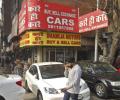
Even as the semiconductor shortage has limited the demand for new cars, the pre-owned car segment is seeing a surge. A preference for personal mobility, availability of multiple organised online platforms, including e-commerce channels, aggregators, and classifieds, have been fuelling growth. The growth rate of the pre-owned car market is expected to be 1.5x that of the new car market over the next five years.

Business executives are finally dusting off their long-unused suitcases to resume travel, thanks to a good vaccination rate, a drop in fresh cases, and an easing of travel restrictions. It comes as a huge relief for the ravaged aviation, travel and hospitality sectors. "We are witnessing a 40 per cent recovery on pre-covid volumes from our business travellers, signalling the return of corporate confidence in air travel," said Indiver Rastogi, president & group head, Global Business Travel, Thomas Cook (India) & SOTC.
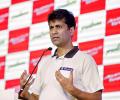
As a 75-year-old septuagenarian, Bajaj Auto has adapted itself as a nod to competition, regulations, and changing buyer preference. It will continue to do so, said its managing director Rajiv Bajaj at the launch of the all-new Pulsar 250. This was in response to a question on the company's preparedness for disruption by electric two-wheeler start-ups.

After a better-than-expected Dussehra weekend, hospitality firms are hopeful of ending the year on a positive note by doing good business over Christmas and the New Year. Typically, year-end bookings kick in two to four weeks before the season begins. Owing to pandemic-related uncertainties, hotels are seeing a significant reduction in the booking window, with travellers waiting till the last minute to make hotel reservations.

The first leg of the 35-day festive period, which ended with Dussehra, failed to bring any cheer for auto companies. While makers of passenger vehicles struggled to meet demand due to the persistent shortage of semiconductors, a recovery in demand remained elusive for two-wheeler manufacturers despite offers and schemes. The overall season, which ends two days after Diwali, is unlikely to bring any turnaround in either the supply or the demand scenario, said dealers and officials at auto companies.

Ahead of the peak festive season, India's passenger vehicle makers are staring at a cumulative order backlog of nearly 500,000 units as chip shortage continues to cripple production. The crisis is forcing companies to change their production plans frequently and take a call on the variants they can manufacture based on the availability of semiconductors. The booking numbers are not a true reflection of demand, said manufacturers.

Mementos, the new brand, would be aimed at addressing the need for boutique luxury hotels across various destinations.

The mood at the Hotel Investment Conference South Asia (HICSA), the annual hospitality industry conference was rather upbeat. But hotel brand operators and owners remain cautiously optimistic of the outlook and are living on a hope that a third wave of the pandemic doesn't become a reality. Having just survived the unprecedented zero revenue situation, the two day confrence organised by consulting firm Hotelivate, was dotted with anecdotes and best practices adopted by the hotels of all hues.

Besides their country of origin, General Motors, Ford Motor and Harley-Davidson have another trait in common: all three have failed in India, the world's fifth largest automobile market. All three of them took a tough call to de-prioritise India as a market amid disruption from heightened regulations and sharper focus on capital allocation by the parent.

First-time buyers of cars and sport utility vehicles (SUVs) have made a comeback, shows last year's data from top passenger vehicle (PV) makers. If the trend persists, it may move the needle on the overall car penetration ratio. India's car penetration ratio is 32 per 1,000 people - one of the lowest, compared to mature car markets like the US and Europe.
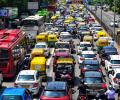
If the court order is implemented, it will lead to an increase in the insurance outgo for car owners by a minimum Rs 50,000 for car and a minimum of Rs 7,000 for two-wheeler owners.

For automakers, the festive season is about raking it in through ramped up sales and attractive consumer offers. However, despite the robust demand, what may spoil the party this year is a global shortage of semiconductors.

For Mahindra & Mahindra (M&M), which has just started executing a comeback strategy for wresting back ground it lost to rivals, this could not have come at a worse time. The maker of the Bolero Neo and the Thar models on Thursday said it would have to halt production at its automotive plant for a week due to the worsening supply situation of semiconductors.
 © 2026 Rediff.com - Advertise with us - Disclaimer - Privacy Policy - Sitemap - Feedback - About us - Terms of use - Grievances